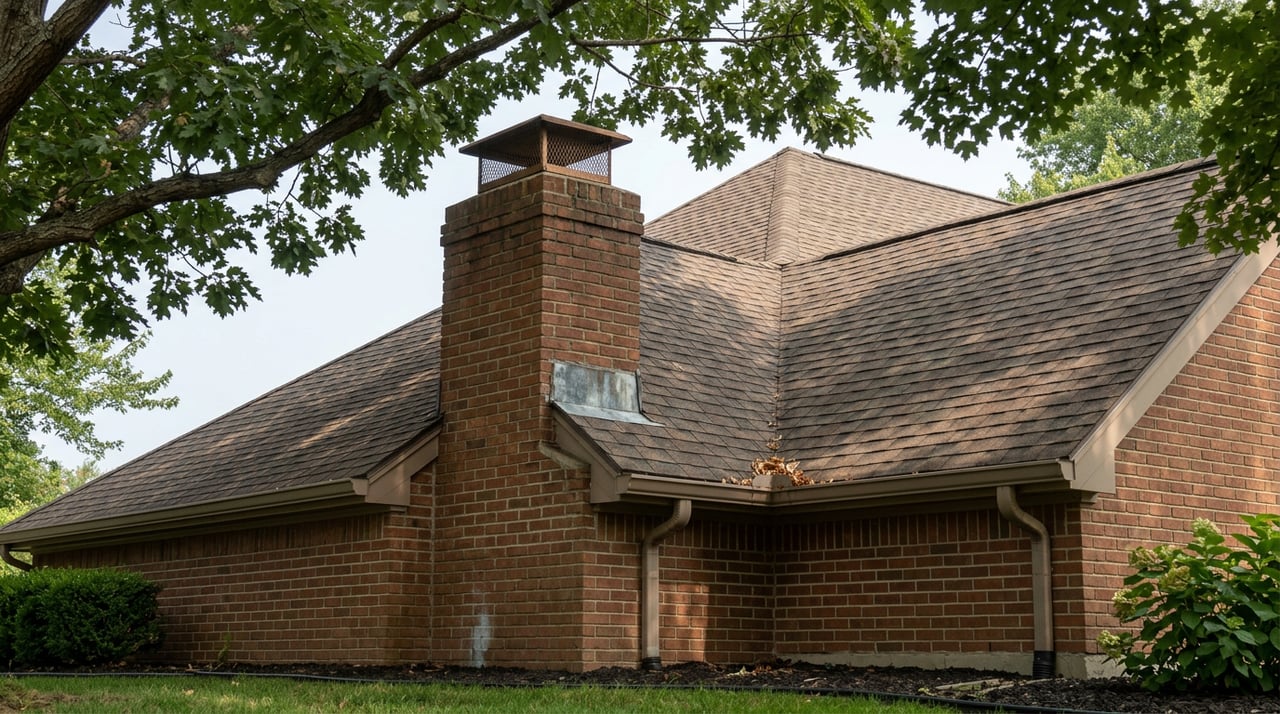
Which stretch of Anderson Township decides whether your inspection report runs three pages or twelve? It isn't the township as a whole. Ask anyone who has bought or sold along Salem Road, Clough Pike, or the Beechmont corridor and you'll hear a version of the same story: brick homes from the 1960s through the 1980s, second or third roof, a chimney leak nobody saw coming. Ask someone closing on a newer build a mile away and the report reads like a formality. Anderson Township's inspection risk isn't spread evenly across the township. It clusters by street and by decade, and knowing which cluster you're in tells you more than any general warning about "older homes" ever will.
That distinction matters because two things about this market get flattened into township-wide scare stats that don't hold up under a closer look: the radon designation and the tree canopy. Here's what the data and the local trade actually say, plus the paperwork mechanic that can undo a signed contract before either side gets near an inspection.
The Form That Can Undo A Signed Contract
Before any inspector sets foot on the property, Ohio law requires the seller to deliver a completed Residential Property Disclosure Form to the buyer, and it has to happen before the buyer signs the purchase contract. This isn't a formality with soft edges. Ohio Revised Code Section 5302.30 builds in a specific consequence for getting the timing wrong: if the form arrives after the buyer has already signed, the buyer gets a statutory right to rescind, no proof of damages required. The rescission window closes at whichever comes first: three business days after the buyer actually receives the form, or 30 days after the buyer signed the contract.
That's a tight, unforgiving clock, and it's the kind of detail that gets missed when a listing moves fast or a form gets handed over verbally with the paperwork to follow "later." A handful of transfers are exempt, including sales where the buyer has already lived in the property for a year or more, newly built homes that have never been occupied, and certain court-ordered or estate transfers. Everyone else needs the form in hand before ink hits the contract.
The disclosure form itself only covers what the owner actually knows. It isn't a substitute for an inspection, and Ohio law is explicit that inaccessible areas like crawl spaces and attics aren't assumed to be part of the owner's knowledge unless stated otherwise. That gap between what an owner discloses and what an inspector finds is exactly where the next section picks up.
Two Eras, Two Inspection Reports
Anderson Township's housing stock isn't one thing. Large sections were built from the 1980s onward as planned family subdivisions, and those reports tend to be short: a water heater near the end of its run, minor grading issues as landscaping settles, not much else. But a real slice of the township, particularly the corridors around Salem Road, Clough Pike, and Beechmont, is still carrying its original 1960s and 1970s brick construction, and local roofing contractor Rooftop Relief has serviced this area long enough to describe the pattern in specific terms: many of these homes are on their second or third roof, and the single most common call is a chimney leak traced to corroded galvanized flashing where the original mortar joint has dried out over decades.
The tree canopy is the variable that ties both eras together and changes the math for the older ones. Anderson Township's mature oaks, maples, and sycamores are a defining feature of the community, but they also mean constant leaf, branch, and sap exposure that traps moisture and feeds moss on shaded roof slopes. Rooftop Relief puts a number on what that does to a roof's working life: instead of the 25 to 30 years a standard shingle is rated for, roofs here tend to wear out in 18 to 22 years. That's a meaningful gap when you're pricing a home with an unknown roof age, and it's the reason a yearly roof inspection matters more here than in a neighborhood without the same canopy density.
| Pre-1980 brick homes (Salem Rd, Clough Pike, Beechmont corridor) | 1980s-and-newer builds | |
|---|---|---|
| Roof | Often on second or third roof, chimney flashing failure is the top service call | Usually still on original roof, less urgent |
| Effective roof lifespan | 18 to 22 years due to tree canopy exposure | Same canopy effect applies, but roofs are younger |
| Typical replacement cost | $10,000 to $12,000, with most homes landing $11,000 to $13,500 | Same range when the time comes |
| Common inspection findings | Chimney flashing, aging mortar, moss on shaded slopes | Grading and drainage as landscaping settles |
None of this means older homes are bad buys or that sellers should panic. It means the report you'll get is predictable if you know which pocket of the township you're looking at, and a pre-listing inspection lets a seller get ahead of exactly these findings before a buyer's inspector finds them first.
The Radon Zone Label Oversells the Risk, But Not by Much
Hamilton County sits inside the EPA's Radon Zone 1, the designation for counties with the highest predicted potential for elevated indoor radon. That label alone is enough to make a buyer nervous about any home in the county, Anderson Township included. But the actual testing data tells a calmer story. Based on more than 43,000 radon tests conducted across Hamilton County by state-licensed professionals, the county's average indoor radon reading comes in at 3.22 pCi/L, below the EPA's 4.0 pCi/L action threshold.
That average is reassuring, but it isn't a reason to skip testing. The same dataset includes a maximum recorded reading of 316.65 pCi/L, more than 79 times the action level, which means individual homes can spike well past what the county average suggests. Zone designations describe a region, not a specific house. The EPA itself is clear that its Map of Radon Zones should never be used to decide whether an individual home needs testing. Test the house you're buying regardless of what the county average says, and don't let the Zone 1 label alone drive up your anxiety about a specific address more than the data supports.
What the Repair Negotiation Actually Looks Like
Ohio doesn't require a seller to fix anything an inspection turns up. Repairs, credits, or an as-is sale with full disclosure are all negotiated terms, not legal obligations, once the inspection contingency window opens. That flexibility narrows depending on financing. FHA and VA loans carry minimum property standards, so issues like exposed wiring, missing handrails, or a non-functioning HVAC system typically have to be resolved before closing regardless of what the purchase contract says. Conventional financing gives both sides more room, though lenders will still flag major structural or safety concerns during appraisal.
For sellers weighing whether a pre-listing inspection is worth the cost, the answer in a township with this much variation by era is generally yes. It puts the chimney flashing or the aging roof on the table on your terms, at your pace, instead of letting a buyer's inspector set the tone of the negotiation.
The Closing Cost Nobody Budgets For
Hamilton County charges a real estate conveyance fee of roughly $4.00 per $1,000 of the sale price, combining Ohio's statewide $1.00 per $1,000 mill with the county's permissive fee, and it's customarily the seller who pays it at closing through the county auditor's office when the deed is recorded. On a typical Anderson Township sale, that's a few hundred to over a thousand dollars depending on price, small enough to overlook while budgeting for repairs and staging, but real enough to show up on the settlement statement.
It's worth pairing that one-time cost with the ongoing one. Anderson Township's median effective property tax rate runs around 2.14%, noticeably higher than Ohio's statewide median of 1.60% and well above the national median of 1.02%. That gap reflects local school district levies stacked on top of the county base rate, and it's a number worth factoring into a monthly payment comparison, especially for a buyer weighing an older home in an established section against a newer build in the same township.
Quick Answers Before You Sign
Does Ohio require sellers to fix everything an inspector finds? No. Repairs are negotiated between buyer and seller as contract terms, not a legal requirement, outside of FHA and VA minimum property standards.
What happens if the disclosure form shows up after I've already signed? Under Ohio Revised Code 5302.30(K), you gain a statutory right to rescind the contract, good for three business days after you receive the form or 30 days after signing, whichever comes first.
Should I test for radon even if the county average looks fine? Yes. Hamilton County's average sits below the EPA action level, but individual homes have tested far above it. The county average describes the region, not your specific address.
Who typically pays Hamilton County's conveyance fee? The seller, by local custom, at the time the deed is recorded with the county auditor.
If you're weighing a brick two-story near Clough Pike against a newer build farther into the township, or you're a seller trying to decide whether a pre-listing inspection is worth scheduling before you list, that's exactly the kind of local read Amy Houston walks clients through street by street. Reach out and let's talk through what your specific address is likely to show, before an inspector tells you first.
