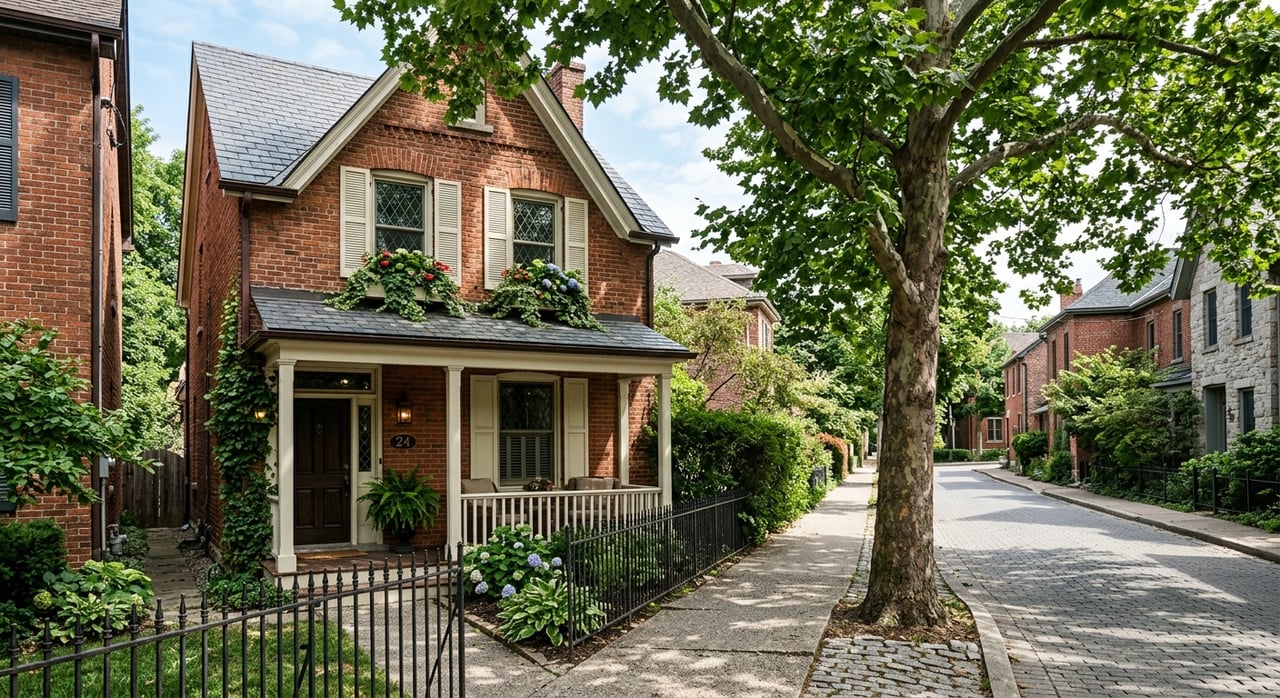
If you love places where design shapes everyday life, Mariemont is hard to ignore. This village was planned with intention, and you can feel it in the streets, the homes, and the way public spaces connect to daily routines. If you are drawn to architecture, walkable village centers, and neighborhoods with a distinct visual identity, Mariemont gives you a lot to notice. Let’s dive in.
Why Mariemont Feels Different
Mariemont was designed in the early twentieth century by planner John Nolen for Mary Muhlenberg Emery and the Mariemont Company. From the start, the goal was to create a professionally planned community that combined housing, shops, parks, infrastructure, and services in a suburban setting near Cincinnati.
That matters because Mariemont’s appeal is not random. Its look and layout were designed to work together, which gives the village a more unified feel than many neighborhoods that grew in pieces over time. The village describes itself as a National Historic Landmark community known for tree-lined streets, Tudor-style buildings, historic charm, and an English garden-neighborhood feel.
Mariemont’s historic recognition also adds context for buyers who care about preservation and place. The village ties its National Register status to 1979 and its National Historic Landmark status to 2007, reinforcing how unusual this community is in the region.
Streets That Create a Sense of Place
One of the first things design lovers often notice in Mariemont is the street pattern. Instead of a standard grid or a typical suburban subdivision layout, the village uses curving streets, spoke-like avenues, and a town center organized around a radial square.
According to the National Park Service nomination, natural features like woods and streams were retained as part of the plan. That choice helps the village feel softer and more connected to the landscape. It also creates a setting where the built environment does not overpower the natural one.
The same source notes that the streetscape was designed so pedestrians could move from one point to another without depending on a car. In practical terms, that means the village center, public spaces, and residential areas feel linked rather than isolated from one another.
The Village Core Works as Part of Daily Life
Mariemont’s town center is compact and intentional. Shops, restaurants, offices, benches, and a fountain were concentrated in a walkable core, making errands and casual outings feel built into the neighborhood experience.
That kind of layout can be especially appealing if you want more than a pretty house. For many buyers, the real draw is how the setting supports everyday living, from a quick meal out to a simple walk through the center of the village.
The entry experience matters too. The National Park Service notes that Wooster Pike broadens into a tree-lined boulevard as it enters Mariemont, which adds to the sense that you are arriving somewhere with a strong visual identity.
Parks and Green Space Are Part of the Design
Mariemont’s green space is not tucked away as an afterthought. The village says it created more than 50 acres of parkland, including Dogwood Park, Bell Tower Park, Dale Park, and several pocket parks.
That visibility changes how the village feels on a daily basis. Parks and open spaces are woven into the residential fabric, so the outdoors feels close at hand rather than separate from where people live.
The South 80 expands that experience even more. The village describes it as 75-plus acres along the Little Miami River with 7 miles of trails, community garden plots, a campsite, and river frontage.
Small Details Add Rhythm to Village Life
Design is not only about buildings. It is also about how public spaces are used over time, and Mariemont has traditions that reinforce that sense of place.
For example, the 2026 carillon season begins on Memorial Day and continues every Sunday through Labor Day in Dogwood Park. Events like that help public space feel active and connected to the life of the community.
Home Styles Design Lovers Notice
Mariemont’s housing stock is rooted in period-revival architecture. The National Park Service nomination says most homes reflect variations of English Tudor, including Cottage or Cotswold and Jacobean forms.
You will also find American Colonial Revival, Georgian Revival, Dutch Colonial, and rural vernacular house types. That mix gives the village variety, but it still reads as cohesive because the homes share a strong historical vocabulary.
Commercial and apartment buildings also contribute to that character. The nomination notes Tudor Revival commercial and apartment buildings along Wooster Pike and Center Streets, plus architect-designed clusters that helped establish the visual standard for the village.
Why the Cohesion Matters
If you are design-minded, visual consistency can be a major part of the appeal. In Mariemont, that consistency comes from a shared planning vision rather than chance.
The result is a neighborhood where architecture, streetscape, and landscape support one another. Instead of one standout home surrounded by unrelated styles, you get a more complete experience of place.
Historic Character Comes With Oversight
For many buyers, Mariemont’s preserved look is a big plus. At the same time, it is important to understand that historic character is supported by review standards.
The village’s Architectural Review Board requires approval before changes can be made to property in the historic district. The board reviews exterior alterations, additions, signs, fences, colors, and roof work.
This is one of the biggest practical considerations for a buyer. If you want a home with established character and stronger architectural cohesion, Mariemont may feel like a great fit. If you want broad freedom to redesign the exterior without oversight, it may feel more restrictive.
A Smart Buyer Question to Ask
Before you make an offer, think about how much exterior change you may want over time. A design lover who appreciates historic continuity may see the review process as part of what protects the village’s charm.
On the other hand, if your vision includes major exterior changes, it is wise to understand the approval process early. That clarity can help you choose a home that matches both your taste and your expectations.
Dining, Shopping, and Culture Nearby
Mariemont’s village center is not only attractive. It is also active. The Mariemont Area Chamber of Commerce’s 2025-2026 directory lists a local mix that includes Quarter Bistro, Dilly Bistro, National Exemplar, Jersey Mike’s, The Village Bookworm, Boards & Beez, and the Mariemont branch of the Cincinnati Public Library.
That blend supports the kind of compact, local lifestyle many buyers want. You can see how the original plan still shapes modern convenience, with dining, browsing, and basic errands close to the center of the village.
Community life also stands out here. The resident-run Town Crier publishes eight issues a year and offers free copies at the library and village businesses, which adds another layer of local connection.
Arts and Civic Traditions Add Depth
Mariemont offers more than curb appeal. The Woman’s Art Club Cultural Center at the Resthaven Barn provides art instruction, exhibits, studios, children’s activities, and events.
The Mariemont Garden Club hosts an annual plant sale and is described as the village’s longest-running civic association. The Mariemont Preservation Foundation also hosts events and walking tours, giving residents and visitors more ways to experience the village’s design history.
Seasonal events help keep that momentum going. The chamber’s Village Valentine’s event in 2026 placed hearts outdoors around Mariemont, and the preservation foundation’s Taste of Mariemont tradition brings together food, local organizations, and the village’s commercial core.
Recreation Supports the Lifestyle
Mariemont also offers amenities that reinforce its neighborhood feel. The village pool’s 2026 season is open to residents of the Mariemont City School District and includes three pools, concessions, and lounge space.
The Racquet Club offers five regulation tennis courts and one practice court in Mary Emery Park. These features support an active lifestyle while staying consistent with the village’s small-scale, community-oriented design.
What Mariemont Means for Buyers
If you are searching for a home that feels visually distinctive, Mariemont offers something rare in the Cincinnati area. It is best understood as a preserved, lived-in town plan where architecture, landscape, and civic life were designed to work together from the beginning.
That does not mean it is the right fit for every buyer. The same qualities that make Mariemont memorable, like historic architecture and preservation review, can also shape what ownership feels like in practical terms.
For the right buyer, though, that tradeoff is exactly the point. If you value walkability, mature streetscapes, integrated green space, and homes with a strong architectural vocabulary, Mariemont stands out as a place where design is part of daily life.
If you want help finding a home that fits both your style and your practical goals, Amy Houston offers thoughtful guidance, local insight, and a design-aware approach that helps you move forward with confidence.
FAQs
What makes Mariemont, OH appealing to design lovers?
- Mariemont stands out because it was intentionally planned as a full community, with architecture, streets, parks, and civic spaces designed to work together rather than developing separately over time.
What architectural styles are common in Mariemont, OH homes?
- According to the National Park Service nomination, Mariemont includes English Tudor styles such as Cottage or Cotswold and Jacobean forms, along with American Colonial Revival, Georgian Revival, Dutch Colonial, and rural vernacular house types.
What should buyers know about exterior changes in Mariemont, OH?
- In the historic district, the Architectural Review Board reviews exterior alterations, additions, signs, fences, colors, and roof work, so buyers should expect more oversight than in neighborhoods with fewer design controls.
Does Mariemont, OH have walkable public spaces?
- Yes. The village plan included a compact town center, pedestrian-friendly streets, parks, and connected public spaces that make it easier to move through the village without relying entirely on a car.
What amenities support daily life in Mariemont, OH?
- Mariemont offers parks, trails, a village center with restaurants and shops, library access, cultural programming, seasonal events, a pool for eligible residents, and tennis courts at Mary Emery Park.
